What If the Hard Part Is the Path, Not the Obstacle?
Discipline is not the obstacle. This essay shows why repetition, patience, and effort are the real path to meaningful change.
The real shift came when I stopped treating effort as a sign something was wrong
For a long time, I wanted the result more than I wanted the process.
I wanted the feeling of having built something without submitting myself to the long, boring, frustrating part of building it.
I wanted progress that looked clean.
I wanted effort that paid me back quickly.
I wanted proof early.
I wanted to know that if I gave something a week I would get a visible return.
If I did not, I started doubting the method, doubting myself, or looking for a better route.
That pattern wasted a lot of my time.
I think many of us do this.
We look at finished outcomes and imagine the path was somehow lighter than it was. We see the polished thing. We see the confidence, the skill, the visible success. We do not see the repetition. We do not see the boredom. We do not see the months or years where nothing looked impressive from the outside.
And because we do not see that part, we start negotiating with reality.
We start asking whether there is a smarter way around the hard part. I asked that question for years. What I learned is simple.
Usually there is no way around it.
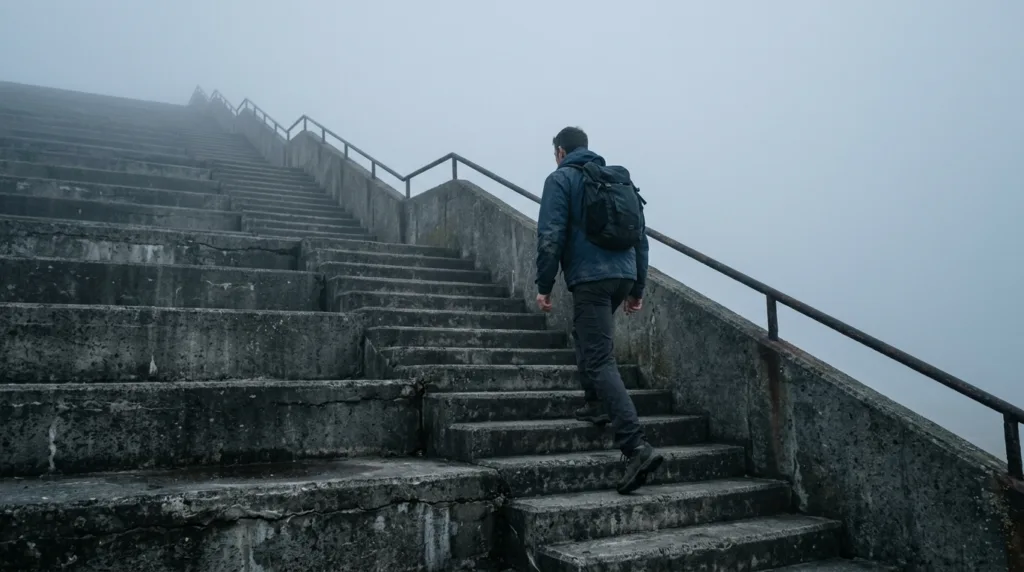
The grind is not the obstacle between me and the thing I want.
The grind is the path itself.
I kept looking for a better trick
I was always interested in methods, systems, hacks, optimizations, and ways to reduce friction.
I still think those are useful. But I used them badly.
- I used them to postpone discomfort,
- I used them as a substitute for repetition,
- I used them to feel intelligent instead of being consistent.
That is a dangerous trade.
It makes me feel like I am working on the problem while quietly avoiding the actual work. I can spend hours improving the process while never going through the process.
That is not strategy.
That is resisting reality with better branding. I had to admit that the most reliable method in my life was always the least exciting one.
Do the thing.
Keep doing it. Keep doing it after the novelty dies. Keep doing it when the feedback is weak. Keep doing it long enough for reality to respond.
That was the lesson. Not glamorous. Not clever. But true.
The things that changed me were slow
One of the clearest examples for me was sleep after I quit drinking.
I knew quitting was the right move.
I also assumed that once I made the decision, my body and mind would quickly reward me for it. That is not what happened.
For a long time, sleep was awful.
I woke up at night. I felt the physical chaos of withdrawal and adaptation. Restless, tired and resigned. Nothing about that period looked like an inspiring self-improvement story. It looked messy. It felt slow.
If I judged the decision by the first results, I’d say it was not working.
But it was, on a timescale I did not like.
That distinction matters.
Some things are effective long before they are comforting. Some things are healing long before they feel good. I had to stay with the process before the process started paying me back.
I saw something similar with my gratitude journal.
I did not become a different person because I noticed a few good things for a week. I changed because I kept directing my attention at good things for a year, so my mind slowly stopped defaulting to complaint. That change was built, not granted. It was not dramatic. It was repetitive.
And that is exactly why it worked.
Repetition gave me things emotion never could
A lot of what improved my life came from doing things I did not feel like doing.
That is not sexy, but useful.
I did not get better by waiting for enthusiasm.
I got better by:
- returning
- sitting down again
- fixing the same kind of problem over and over
- explaining the same constraints again to another stakeholder
- staying with tasks long enough for competence to emerge.
I wanted passion first. I wanted to feel deeply aligned before I gave something serious energy.
But for me the order was reversed.
I worked, repeated and got stronger. After that affection for the craft started to grow. That matters because I think many people wait for a feeling that arrives late.
They think love of the work should come before the work.
Sometimes it does. But usually it does not. Devotion is the result of repetition. Confidence is the result of surviving boredom. Passion is what grows after I have carried the weight long enough to become capable.
When I spend a day workin on what matters to me, I usually feel better at the end of it. Not entertained. Not euphoric. Better. Calmer. More settled in myself.
There is a specific kind of peace that comes from not avoiding my responsibilities. I call it quiet satisfaction. It runs in the background, where you can also find anxiety. But when there is quiet satisfaction, anxiety has nowhere to show.
The work does not always feel good while I am doing it, and almost never before.
But finishing a day without hiding from what needed to be done gives me self-respect that comfort never does.
I stopped trusting advice that skips the climb
Another thing I had to learn is that successful people often describe the peak from the peak.
They speak from a place built on years of “hidden” labor. Sometimes they remember that. Sometimes they do not. Sometimes they simplify because it sounds better.
So if I am not careful, I end up listening to someone who already has leverage, skill, credibility, or momentum, and I try to apply their current approach to my beginning.
That can distort everything. It can make me think the path should feel easier than it does. It can make me think effort is a sign I am doing it wrong. It can make me underestimate how much repetition I have to do, before gettin to the top.
I think it is better to watch what people did than to obsess over what they say.
- What were they repeating when no one cared.
- What did they keep doing before the returns were obvious.
- What did they endure before they could afford elegance.
That is where the knowledge lives. I do not need fantasies about the glamorous path they created in their minds.
I need reality. And reality keeps saying the same thing:
- Put in the energy
- Stay with the work
- Accept the timeline.
Reality does not reward me for wishing
I don’t believe in manifestation.
Which basically means I stopped wishing for things to happen.
The world does not naturally arrange itself into order on my behalf. Without attention, things drift. Without effort, things decay. Without maintenance, systems break down.
- A room gets messy.
- A habit weakens.
- A mind becomes noisy.
Order needs intervention. Structure needs energy. I do not even say that in a pessimistic way. I say it because it helped me stop bargaining with the obvious.
If the natural pull is toward disorder, then I should not be shocked that meaningful outcomes require force, repetition, and care.
- Why would I expect strength without training.
- Why would I expect output without labor.
- Why would I expect clarity without trying.
Once I accepted that, a lot of confusion disappeared.
I stopped treating effort as evidence that something was wrong. And I started treating effort as the cost of creating order.
I do not need to love the grind to respect it
I do not think the answer is to worship grinding.
- I am not interested in destroying myself in the name of achievement.
- I do not think exhaustion is a personality type.
- I do not think burnout is noble.
But I also do not lie to myself.
There are things I want. There are outcomes I care about. There is a version of my life I am trying to build. And that version does not get built by preference alone.
It gets built by doing what I have to do. Not what I happen to want in the moment.
That is the part many people resist.
I resisted it too. I wanted a clean philosophy that made discipline optional. I wanted freedom without obligation. I wanted results without sustained effort.
But life kept teaching me the same lesson.
If something matters, it will ask more of me than comfort can give. So now my relationship with the grind is more mature. I do not need to romanticize it. I do not need to pretend I enjoy every part of it.
I need to stop expecting a meaningful life to appear without it.
I can dislike the repetition and still honor it. I can be tired of the process and still continue. I can complain and still do the work.
What matters is not whether I feel poetically aligned with the effort, but whether I keep going long enough for the effort to bear fruits.
The useful question life taught me
When I’m looking for a shortcut, I ask:
- What would let me escape the work?
When I want to get shit done I ask:
- What’s required to get the job done?
That is an honest question.
And If the answer is repetition, then I repeat. If the answer is patience, then I practice patience. If the answer is more hours of awkward, uncelebrated, ordinary effort, then that is the price.
Honestly, usually I dislike that answer.
But most of the good things in my life came after I stopped arguing with what’s required.
And once I did that, I became more effective.
Not because the work got easier. But because I stopped trying to escape the very thing that was supposed to shape me, so I got stronger.
The grind is not what blocks the way.
For me, it has been the way all along.